Ask any experienced contractor in India where the best gypsum comes from, and the answer is almost always the same: Bikaner. This corner of western Rajasthan sits atop the Jamsar mineral belt — one of the largest and highest-purity natural gypsum deposits in the country. It's the reason nearly every major gypsum plaster manufacturer, from national brands to regional specialists, either mines here or sources from mines that do.
But what actually makes Bikaner gypsum different? Is it just marketing, or is there real geology and chemistry behind the reputation? The answer is both — and it starts about 500 million years ago.
1. The Jamsar Mineral Belt
The Bikaner gypsum belt — commonly called the Jamsar belt after the largest mining village at its heart — stretches across roughly 400 square kilometres of western Rajasthan. It's the product of prehistoric seas: when what is now the Thar Desert was covered by shallow marine water, evaporation over millions of years left behind massive deposits of calcium sulphate. Continental drift buried these deposits under layers of sedimentary rock, where they remained until modern mining brought them back to the surface.
The scale is enormous. Rajasthan alone accounts for roughly 91% of India's total gypsum reserves, and within Rajasthan, Bikaner district holds the largest and highest-quality deposits. Nagaur and Jaisalmer sit next in line but with lower average purity.
2. What Makes Bikaner Gypsum Special
Three characteristics separate Bikaner-sourced gypsum from the rest:
Purity
Bikaner gypsum typically tests at 90–95% CaSO₄·2H₂O, with some seams above 95%. Compare that to Tamil Nadu marine gypsum (75–85% typical) or Gujarat gypsum (80–88%). Higher purity means less filler, less contamination, and more predictable behaviour during application.
Whiteness
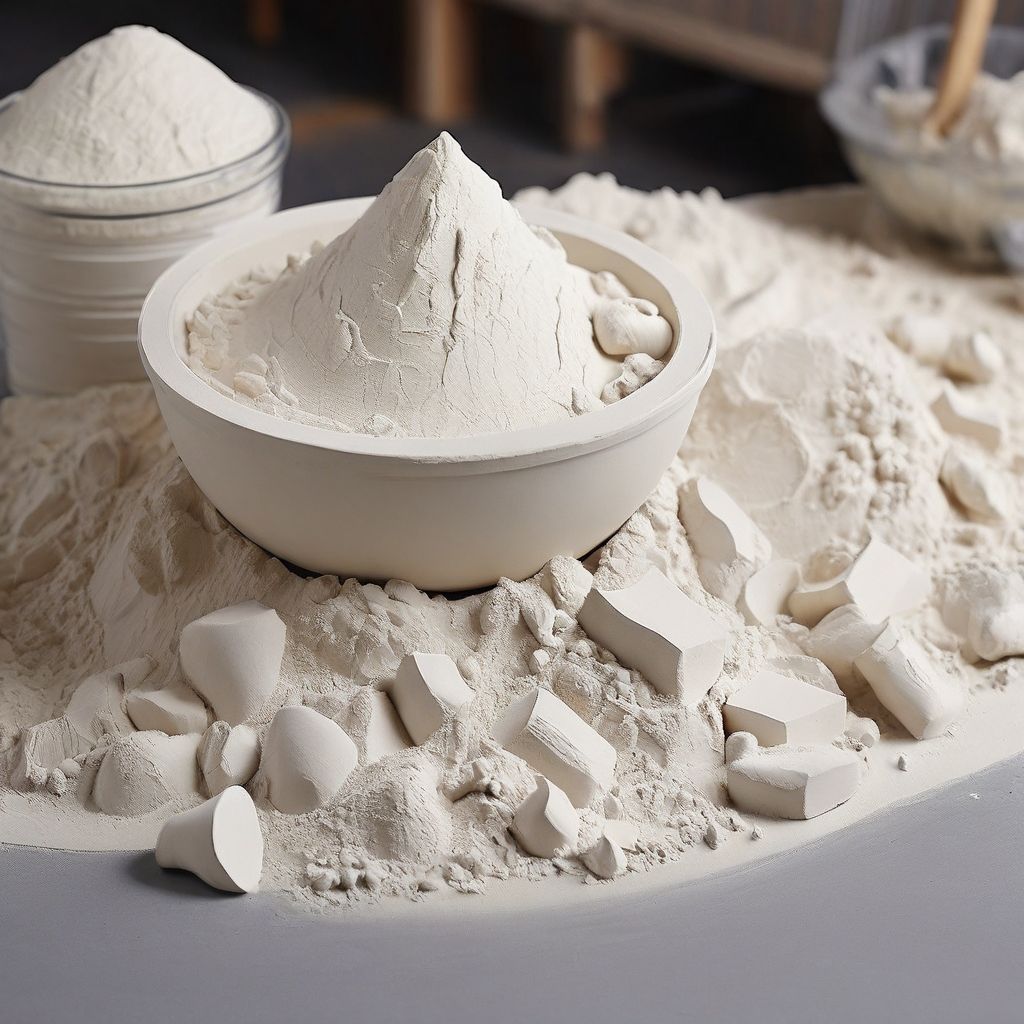
Naturally white without processing. Low iron and clay content means the powder stays brilliant white after grinding, tested at 85–90+ on standard whiteness scales. Other deposits often need extra washing and bleaching just to reach the whiteness Bikaner gypsum has straight out of the mine. This translates directly to how the finished wall looks under paint.
Fine crystal structure
Bikaner gypsum has an unusually fine, uniform crystalline formation. When milled it grinds to a very fine, consistent powder — which translates to smoother trowelling, cleaner finish, and less wastage on site. Coarser or irregular crystal structures from other belts are harder to grind uniformly.
3. Comparison With Other Indian Sources
India has four main gypsum sources, each with a distinct profile:
| Source | Type | Typical Purity | Main Use |
|---|---|---|---|
| Bikaner / Nagaur (RJ) | Mined natural | 90–95%+ | Premium plaster, POP |
| Tamil Nadu coast | Marine gypsum | 75–85% | Cement industry |
| Gujarat | Mined natural | 80–88% | Mixed use |
| Phosphogypsum | Fertiliser by-product | 85–92% | Cement, road base |
For gypsum plaster and POP — where whiteness, purity, and setting behaviour directly affect the final wall finish — Bikaner is the natural choice. Marine and phosphogypsum both work fine for cement blending but can't deliver the finish quality that interior plaster demands.
4. Why Manufacturers Set Up in Bikaner
Drive around Bikaner and its outskirts and you'll pass dozens of gypsum plaster and POP factories within a 30 km radius of the Jamsar mines. Three reasons this concentration happened:
- Freight economics. Gypsum is heavy and cheap per tonne. Moving raw stone even 200 km away wipes out much of the cost advantage. Manufacturing close to the mine keeps final product prices competitive.
- Skilled labour. Bikaner has generations of workers who've been in gypsum since the deposits were first opened commercially in the 1960s. That skill base is hard to replicate elsewhere.
- Government infrastructure. Rajasthan State Mines and Minerals Ltd (RSMML) manages the primary leases, and the state has built rail and road links specifically to support the gypsum industry.
5. How to Identify Authentic Bikaner Gypsum
Not every "Bikaner gypsum" bag on the market is truly from Bikaner — some are cut with cheaper filler gypsum from other regions. A few practical checks a contractor or dealer can do:
- Look at the powder. Truly Bikaner gypsum plaster is brilliantly white. Any yellow, grey, or brown tint suggests contamination or a lower-purity source.
- Feel the fineness. Rub a pinch between your fingers. Bikaner-sourced material feels silky smooth, not gritty.
- Check the setting window. Bikaner gypsum plaster consistently sets in 25–30 minutes. Off-source or contaminated material often sets too fast (12–18 min) because of impurities.
- Buy ISI marked. Look for BIS IS 2547 (Part 1) compliance and a CM/L licence number. This proves the manufacturer has gone through BIS testing, which catches purity deviations.
The mine is the beginning of the story, but the BIS licence is what verifies the story is still true when the bag reaches your site.
6. Role in Indian Construction Today
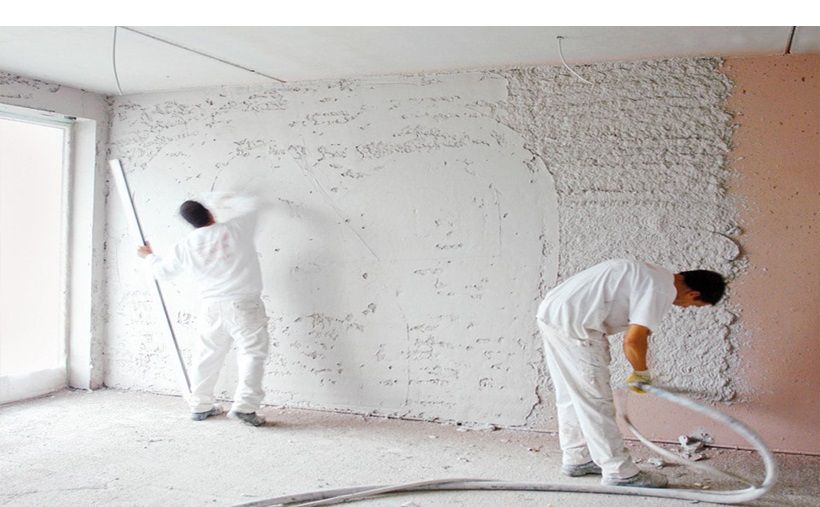
Over the past 15 years, gypsum plaster has grown from a specialty product to the default choice for interior finishing across India's urban construction market. Reasons: single-coat application, no water curing, better finish quality, faster schedules.
And most of that growth has been fuelled by Bikaner gypsum. Whether it's a Gurgaon high-rise, a Mumbai commercial tower, or a Bangalore IT campus, the gypsum in the walls almost certainly came from Rajasthan — and most often from Bikaner. Architects and BoQ writers have started specifying "Bikaner-sourced gypsum" by name in project documents. It's become a quality indicator on its own, similar to how "Kota stone" or "Makrana marble" carries geographic meaning in Indian construction.
7. The Shankra Plaster Connection
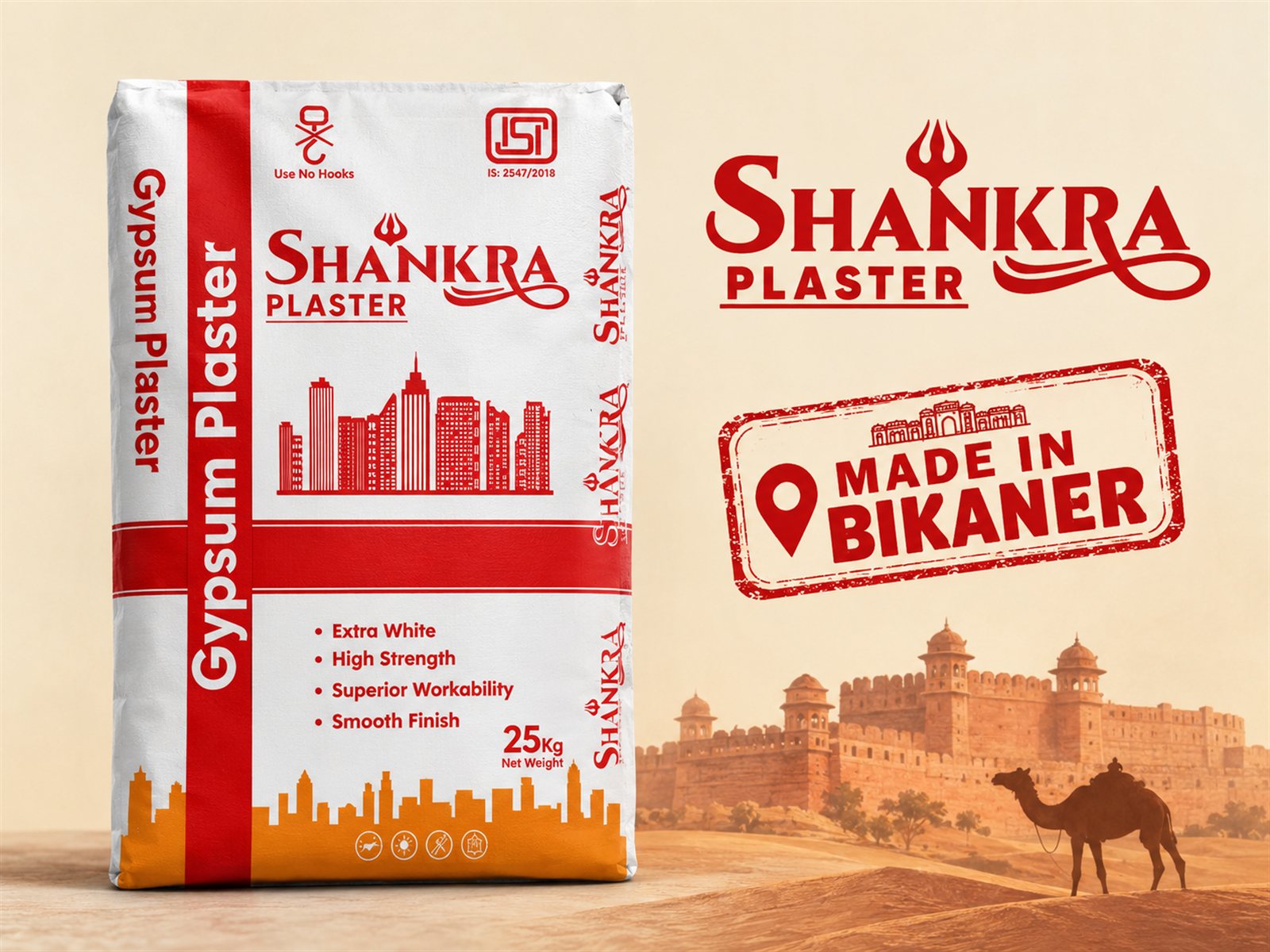
Shankra Plaster is manufactured in Bikaner from Bikaner-mined natural gypsum — no shortcuts, no phosphogypsum blending, no shipped-in lower-grade filler. Every bag carries the BIS ISI mark (IS 2547 Part 1, CM/L 8400287413), which proves the plaster inside comes from a certified quality source and meets Indian Standard specifications for gypsum building plaster.
That's the whole point of buying from a manufacturer actually based here — the shortest possible supply chain from mine to bag, and no ambiguity about what's inside.
The reputation is real. It's backed by geology, verified by testing, and directly reflected in the finish of a wall. That's why "Bikaner gypsum" matters, and why the Indian construction industry keeps coming back.
For projects where finish quality and consistency matter, our Shankra Gypsum Plaster delivers the whiteness, workability, and setting behaviour that only Bikaner-sourced gypsum can provide. Get in touch for samples, specs, or a project quote.